


In an age where technology intertwines seamlessly with our daily routines, mHealth (mobile health) apps have emerged as powerful tools, offering solutions that revolutionize the way we approach healthcare and wellness.
From monitoring vital statistics to providing expert medical advice at our fingertips, these apps embody the essence of modern medicine’s transformative capabilities.
Today we will discuss mHealth apps in detail so that you can put our suggestions into action.
Let’s find out!
The Impact of mHealth Apps on the Healthcare Industry
Mobile health (mHealth) apps are transforming the healthcare industry, offering innovative solutions and benefits for both patients and providers. With the continuous growth of the mHealth app market, we can expect further advancements and innovations in the field, leading to a more connected and efficient healthcare ecosystem.
Mobile phones have revolutionized various industries, and healthcare is no exception. mHealth apps have emerged as powerful tools that are reshaping the way healthcare services are delivered and accessed.
mHealth apps offer a wide range of benefits for both patients and providers, including:
- Convenience and accessibility: Patients can access healthcare services and information from the comfort of their own homes, 24/7. This can be especially beneficial for patients with chronic conditions or those who live in rural or underserved areas.
- Improved patient engagement: mHealth apps can help patients to become more engaged in their own healthcare. By providing patients with the tools to track their symptoms, manage their medications, and learn about their health conditions, mHealth apps can help patients to improve their health outcomes.
- Reduced healthcare costs: mHealth apps can help to reduce healthcare costs by enabling patients to manage their own health more effectively and by reducing the need for in-person visits.
Growth of the mHealth App Market
The mHealth app market is growing rapidly, with a projected value of US$102.35 billion by 2023. This growth is being driven by a number of factors, including the increasing prevalence of chronic diseases, the rising demand for personalized healthcare, and the growing adoption of mobile devices.
The Future of mHealth Apps
The future of mHealth apps is bright. As the technology continues to evolve, we can expect to see even more innovative and effective mHealth apps emerge. These apps will play an increasingly important role in improving the quality and efficiency of healthcare services for all.
mHealth Apps Types

The diverse array of mHealth apps continues to grow, revolutionizing the healthcare landscape by increasing accessibility, convenience, and personalized care for patients and healthcare providers alike.
1. Clinical and Diagnostic Apps
Clinical and diagnostic mHealth apps cater to doctors and physicians, assisting them in collecting and analyzing health data, including lab results and electronic health records. These apps also aid in symptom checking and disease diagnosis for both patients and medical professionals.
A popular example of such an app is “Ada,” which offers users medical advice based on their symptoms.
2. Remote Monitoring Apps
Remote monitoring apps enable patients to receive virtual care from their physicians while staying at home. These apps allow healthcare providers to track essential health metrics such as heart rate, oxygen level, and blood pressure without requiring in-person visits. This remote monitoring ensures continuous care and timely intervention.
3. Productivity Apps for Healthcare Providers
Productivity apps tailored for healthcare providers boost efficiency and organization. These apps streamline tasks like home healthcare scheduling, mobile charting, and remote dictation while ensuring compliance with HIPAA regulations.
4. Reminder Apps
Reminder apps play a crucial role in helping patients remember appointments and medication schedules. Whether integrated within a larger app or available as standalone applications, these apps aid in managing healthcare routines effectively. “RevSpring Patient Connect” is an example of an app that facilitates appointment management for healthcare service providers.
5. Text and Video Communication Apps
Text and video communication apps have gained popularity, especially in light of the pandemic. These apps facilitate virtual video consultations and text messaging between patients and caregivers, improving communication and enhancing patient care. “YouComm” is an mHealth app developed by CoreDevs for in-hospital patients to connect with nurses during emergencies, ensuring timely care and attention.
6. Prescription Apps
Prescription apps empower doctors to prescribe accurate medicines and dosages for patients while allowing them to modify or cancel prescriptions when necessary.
7. Mental Health Apps
Mental health apps aim to make therapy more accessible and effective, offering various features such as breathing exercises, gamification elements, pre-recorded meditations, and more. These apps address mental health concerns like stress, anxiety, depression, and sleep disturbances. “Headspace” is a prominent example, providing meditation sessions for users to combat stress and anxiety, catering to both beginners and experienced users.
8. Fitness and Wellness Apps
Fitness and wellness apps promote a healthy lifestyle by offering exercise routines, nutrition tracking, and personalized health goals. These apps empower users to take charge of their well-being and stay motivated on their fitness journey. From step counters to guided workouts, fitness apps cater to individuals with varying fitness levels and preferences.
9. Chronic Disease Management Apps
Chronic disease management apps are invaluable tools for patients with long-term health conditions. These apps assist in monitoring symptoms, medication adherence, and overall health progress. They also allow healthcare providers to remotely monitor patients’ health and intervene promptly when needed, reducing the burden of frequent hospital visits.
10. Women’s Health Apps
Women’s health apps address specific health concerns and needs related to women’s reproductive health, pregnancy, and postnatal care. These apps offer features such as period tracking, fertility predictions, and pregnancy guides, empowering women to better understand and manage their health throughout different life stages.
11. Elderly Care Apps
Elderly care apps cater to the needs of older adults by providing features like medication reminders, emergency alerts, and caregiver support. These apps enhance the quality of life for seniors and offer peace of mind to their families by ensuring their well-being and safety.
12. Health Education Apps
Health education apps serve as valuable resources for disseminating accurate and reliable medical information. These apps offer articles, videos, and interactive content to educate users about various health conditions, preventive measures, and lifestyle choices, enabling informed decision-making.
13. Telemedicine Apps
Telemedicine apps have revolutionized healthcare delivery, enabling remote consultations and diagnosis. These apps have proven to be indispensable during emergencies and in regions with limited access to healthcare facilities. They bridge the gap between patients and healthcare providers, offering timely medical advice and treatment options.
14. Medication Management Apps
Medication management apps aid patients in organizing their medication schedules, providing reminders for timely dosage and refills. These apps reduce the risk of medication errors and improve treatment adherence, particularly for individuals with complex medication regimens.
15. Personal Health Record Apps
Personal health record apps allow users to store and manage their medical information securely. These apps provide easy access to health records, test results, and vaccination history, facilitating seamless communication between patients and healthcare providers.
Advantages of Mobile Health Apps for Healthcare Professionals and Patients
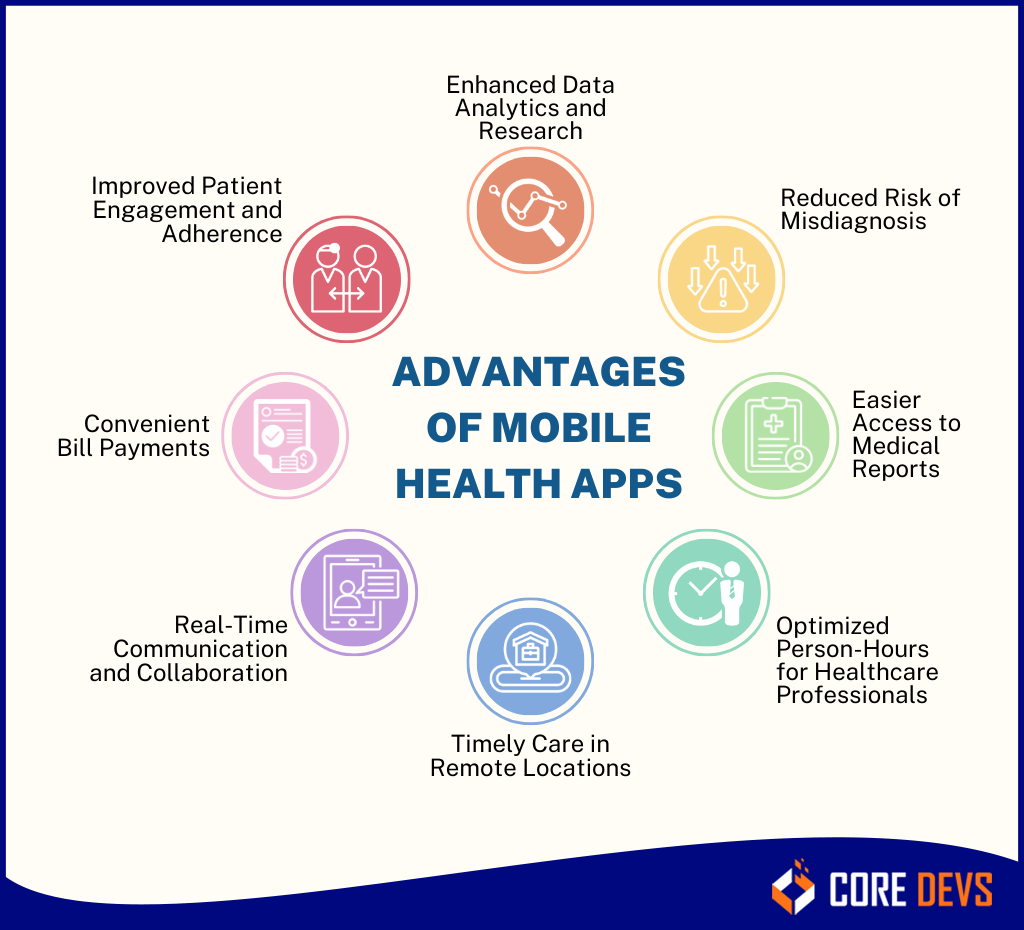
The widespread adoption of mobile health apps has revolutionized healthcare delivery, benefiting both healthcare professionals and patients. These apps enhance diagnostic accuracy, improve access to medical information, optimize healthcare workflows, provide timely care in remote areas, facilitate real-time communication, and offer convenient billing solutions.
As technology continues to advance, the potential for mobile health apps to positively impact the healthcare industry remains vast.
1. Reduced Risk of Misdiagnosis
Mobile health apps play a vital role in minimizing the risk of diagnostic errors. By maintaining comprehensive patient records and treatment options, these apps enable healthcare professionals to make data-driven decisions, reducing the chances of misdiagnosis.
This not only ensures better patient outcomes but also safeguards healthcare providers from potential malpractice lawsuits.
2. Easier Access to Medical Reports
With mHealth apps, patients can conveniently access their medical reports online, eliminating the need to physically visit hospitals. This easy accessibility empowers patients to consult with doctors promptly and accurately, without the hassle of misplacing or forgetting important medical documents.
3. Optimized Person-Hours for Healthcare Professionals
Mobile health technology streamlines healthcare professionals’ workflows, consolidating patient records and treatment procedures in one place. By enabling efficient communication and remote monitoring, m-Health apps reduce physicians’ workload and stress, enhancing the overall quality of patient care while optimizing healthcare resources.
4. Timely Care in Remote Locations
Mobile health apps bridge the gap between patients and healthcare providers in remote locations. Through video calls and remote monitoring, patients can receive timely care without the need for frequent clinic visits. Push-notification systems in apps also facilitate the delivery of important health tips and precautions to users.
5. Real-Time Communication and Collaboration
Mobile health apps facilitate real-time communication and collaboration between patients and doctors globally. This instant sharing of knowledge and expertise enhances patient care by enabling doctors to monitor and manage health conditions proactively.
6. Convenient Bill Payments
Mobile health apps simplify the billing process for both patients and healthcare facilities. Patients can conveniently make bill payments online and interact with their insurers through the app. The streamlined payment procedure reduces administrative burdens for hospital staff and enhances the overall healthcare experience for patients.
7. Improved Patient Engagement and Adherence
Mobile health apps foster increased patient engagement by empowering individuals to take an active role in their health management. Through personalized notifications and reminders, patients are more likely to adhere to their treatment plans, medication schedules, and follow-up appointments. This heightened engagement leads to better health outcomes and reduced instances of non-compliance.
8. Enhanced Data Analytics and Research
The data collected through mobile health apps present a valuable resource for healthcare organizations and researchers. The aggregated and anonymized data can be analyzed to identify health trends, assess treatment effectiveness, and conduct population-based studies. These insights contribute to evidence-based practices and advance medical research.
9. Remote Patient Monitoring
Mobile health apps equipped with remote monitoring capabilities allow healthcare providers to keep a continuous track of patients’ vital signs and health parameters. For patients with chronic conditions or those recovering from surgeries, this remote monitoring ensures timely interventions in case of any deviations from normal health metrics.
10. Personalized Health Recommendations
Using advanced algorithms and artificial intelligence, some m-Health apps can deliver personalized health recommendations based on individual health data. From fitness regimens to dietary plans, these tailored recommendations assist users in making healthier lifestyle choices.
11. Cost-Effectiveness and Time Savings
For healthcare organizations, implementing mobile health apps can result in cost savings by reducing paperwork, administrative tasks, and hospital readmissions. Additionally, patients save time by avoiding unnecessary visits to healthcare facilities for routine check-ups or minor concerns.
12. Global Accessibility to Medical Expertise
Mobile health apps break down geographical barriers, enabling patients to access medical expertise regardless of their location. Patients in remote areas can receive consultations and advice from specialized doctors, eliminating the need to travel long distances for expert medical care.
Step-by-Step Guide to Building a Successful mHealth App

By following these steps and embracing user-centric design principles, you can build a successful mHealth app that addresses specific healthcare needs, engages users, and contributes to a healthier and more accessible healthcare ecosystem.
Step 1: Identify a Problem and Target Audience
The first step in mHealth app development is identifying a specific problem or need in the healthcare industry. Understand the requirements of your target audience and how your app can address their challenges. Choose a medical field to focus on, such as diabetes management or anxiety disorders, to cater to a specific user base effectively.
Step 2: Choose the App Platforms
Decide on the platforms for your mHealth app, considering the preferences of your target users. Elderly patients may prefer web-based solutions, while younger individuals are more app-friendly. Conduct market research to determine whether to develop for Android, iOS, or both, based on your audience’s demographics and usage patterns.
Step 3: Hire a Reputable App Development Company
Engage a reliable healthcare software development company to bring your mHealth app idea to life. A proficient app development team, comprising UI/UX designers, expert developers, and market specialists, will ensure that your app incorporates the latest features and adheres to industry standards. They will also consider your vision while offering valuable insights and expertise.
Step 4: Select a Monetization Model
Determine how your mHealth app will generate revenue. Common monetization models in the healthcare domain include subscription-based plans or a freemium model with paid access to premium services. Choose a model that aligns with your app’s value proposition and target audience’s willingness to pay for the offered services.
Step 5: Build a Minimum Viable Product (MVP)
Instead of developing a full-fledged app, start with a Minimum Viable Product (MVP) to test and validate your app’s core features and concept. Collaborate with the healthcare app development company to identify essential functionalities for the MVP. This approach enables early user feedback and helps prioritize future enhancements based on user preferences.
Step 6: Thoroughly Test Your App
Testing is critical in the development of mobile healthcare solutions. Conduct comprehensive tests to evaluate user experience, user interface, and content. Identify and fix any bugs or issues to ensure a smooth and error-free user experience. Proper testing saves time and cost and enhances your app’s reputation as a reliable service provider.
Step 7: Launch and Monitor Performance
After thorough testing, launch your mHealth app to the market. Monitor its performance using in-app analytics tools implemented during development. Address user feedback, concerns, and requests promptly to improve user satisfaction. Regularly introduce updates and new features to keep users engaged and continuously enhance your app’s functionality.
Cost Considerations for Building a mHealth App
Developing a mobile health app, or mHealth app, involves various factors that contribute to the overall cost. We will explore the average cost of mHealth app development and factors that can impact the final price.
It is important to seek guidance from a reliable app development company like CoreDevs to ensure the development of a high-quality product within your budget.
Average Cost of mHealth App Development
The cost of building a mHealth app can vary depending on several factors. On average, the development expenses may range from $45,000 to $80,000. This cost estimation typically covers basic functionalities and standard features.
Advanced Features and Emerging Trends
Integrating advanced features like artificial intelligence (AI) or Blockchain into your mHealth app can significantly enhance its capabilities but may also increase the overall cost. If you opt for incorporating cutting-edge technologies and emerging healthcare app trends, such as AI-powered diagnostics or Blockchain-based medical records, the cost may rise to a range between $100,000 to $150,000.
Factors Influencing Costs
The final price of an mHealth app can be influenced by various factors, including:
1. App Complexity:
The complexity of the app, including the number of features, user interactions, and data processing, can impact development costs. Complex apps with intricate functionalities generally require more time and resources, leading to higher expenses.
2. App Design:
Investing in intuitive and aesthetically pleasing app design can enhance user experience but might also add to the development costs.
3. Development Team Location:
The geographical location of the development team plays a role in determining costs. Development services in certain regions may be more budget-friendly than in others.
4. App Platform:
Developing an app for multiple platforms (iOS, Android, etc.) will increase the overall expenses compared to building it for a single platform.
5. Regulatory Compliance:
If the app needs to adhere to specific healthcare regulations and data privacy laws, the development process might become more complex and costly.
A Guide from Trusted App Development Companies
Given the complexity of app development and its associated costs, it is essential to consult a reputable app development company like CoreDevs. A reliable development partner will offer expert guidance throughout the entire development process, from concept to deployment.
They will help you optimize costs without compromising on the quality of the final product, ensuring that you receive a cost-effective and high-performing mHealth app.
SaaS Solutions Transforming the Healthcare Sector
In today’s tech-infused world, SaaS (Software as a Service) solutions are revolutionizing healthcare, much like mHealth apps.
SaaS solutions bring numerous advantages to healthcare, aligning with the benefits of mHealth apps.
Let’s see how these tools are reshaping healthcare:
1. Efficient Data Management: SaaS solutions streamline patient data management, exemplified by Electronic Health Records (EHR) systems. They reduce administrative work, ensuring top-notch patient care.
2. Telemedicine Excellence: SaaS-based telemedicine platforms enable remote consultations, just like mHealth apps. They connect patients and providers through video conferencing and data sharing, enhancing patient care.
3. Data-Driven Insights: SaaS leverages data analytics to spot healthcare trends, assess treatments, and conduct research. It offers evidence-based practices and contributes to medical research.
4. Billing Made Easy: SaaS platforms simplify healthcare billing, providing patients with convenient online payment options while streamlining administrative processes for healthcare facilities.
5. Wearable Integration: SaaS smoothly integrates with wearables like fitness trackers and glucose monitors, allowing real-time data sharing between patients and providerst.
6. Adaptability and Scalability: SaaS solutions are flexible and scalable, accommodating healthcare organizations of all sizes and types.
SaaS solutions are integral to healthcare’s future, optimizing operations, processes, and patient care. They empower healthcare organizations just as mHealth apps empower individuals.
Are you curious about how SaaS solutions in the medical sector are shaping the future? Dive into our guide for insights and inspiration!
Conclusion
mHealth apps have revolutionized the way we track and monitor our health data. With these apps, you can easily keep tabs on your daily activities, such as steps taken, calories burned, and even sleep patterns. By having access to this information at your fingertips, you can make more informed decisions about your overall well-being.
Additionally, mHealth apps provide personalized workout plans and fitness tracking features that cater to your specific needs and goals. Whether you’re looking to lose weight, build muscle, or simply maintain a healthy lifestyle, these apps offer interactive features that guide you through workouts and provide real-time feedback on your progress.
If you are considering launching your own mHealth app or seek deeper insights into mobile health technology, do not hesitate to reach out to us. Our team at CoreDevs will be thrilled to offer our expertise and support in bringing your healthcare app ideas to life, driving positive impacts on the well-being of countless users.
Contact us today to embark on an exciting journey towards transforming healthcare through technology.
Frequently Asked Questions
Are Mhealth Apps Secure And Can I Trust Them With My Personal Health Information?
Yes, mHealth apps can be secure and trustworthy with your personal health information. They often use encryption and follow strict privacy regulations to ensure the safety of your data.
How Do Mhealth Apps Ensure Accuracy And Reliability Of The Health Data They Track?
To ensure accuracy and reliability of the health data they track, mHealth apps use various methods such as sensor technology, machine learning algorithms, and data validation techniques. These measures help in minimizing errors and providing trustworthy information about your health.
Can Mhealth Apps Integrate With Other Health Devices Or Wearables?
Yes, mHealth apps can integrate with other health devices or wearables. These apps allow you to connect and sync data from various devices like fitness trackers, blood pressure monitors, and glucose meters for a more comprehensive health tracking experience.
Are There Any Age Restrictions When It Comes To Using Mhealth Apps?
Age restrictions for using m Health apps vary depending on the app and its purpose. Some apps may have specific age requirements, such as being 18 or older, while others are suitable for all ages.
Do Mhealth Apps Have Features To Remind And Motivate Users To Stay On Track With Their Health Goals?
Yes, mHealth apps have features to remind and motivate you to stay on track with your health goals. They can send notifications, provide progress tracking, offer personalized tips, and even send encouraging messages to keep you motivated.

