


Imagine a future where managing vast real estate properties, conducting secure transactions, and developing sophisticated applications are all made more efficient and organized.
This isn’t a distant dream but an emerging reality because of the convergence of two groundbreaking technologies: Cloud and IoT. Together, they are forging a new path in various industries, from real estate to app development.
This blog explores how the cloud and IoT” are transforming the future of enterprise and paving the way for innovations like blockchain development and more.
Join us as we explore this technological fusion and its far-reaching implications in detail!
What is IoT?

The Internet of Things (IoT) consists of a network of connected physical devices, vehicles, buildings, and other items, each equipped with sensors, software, and network connectivity.
This configuration facilitates the gathering and sharing of data, empowering the remote control of these objects through existing network infrastructure.
In real estate and property management, for example, IoT is reshaping how properties are monitored and managed. From energy efficiency to security, the implications are vast. Likewise, IoT enhances the transparency and authenticity of property transactions in blockchain real estate.
Characteristics of IoT
Here are the prominent characteristics that define IoT:
Interconnectivity
IoT devices can connect with each other and with human interfaces over a network. This interconnection is foundational to commercial real estate management and other applications.
Integration
IoT enables integration with various platforms and business services. Whether it’s blockchain development or estate app development, integration plays a key role.
Intelligence
The use of algorithms and computation in IoT devices allows for smart decision-making. This intelligence is crucial in estate industry automation and app development.
Sensing
IoT devices can sense and collect data from the environment. This feature is essential in property monitoring and in the implementation of blockchain technology for transparent transactions.
Active Engagement
IoT devices actively engage with the external environment. In terms of the estate economy and real estate blockchain, this active engagement translates into real-time responses and actions.
Energy Efficiency
Many IoT devices are designed with energy conservation in mind. This aspect is particularly relevant to property management and commercial real estate, where energy efficiency is a priority.
Safety and Security
With the ability to track location, follow safety protocols, and secure transactions through blockchain, IoT ensures safety and security in various fields, including real estate and app development.
Have you ever wondered about the mechanics behind IoT operations? Discover the answers with our insightful article on how IoT functions!
What is Cloud Computing?
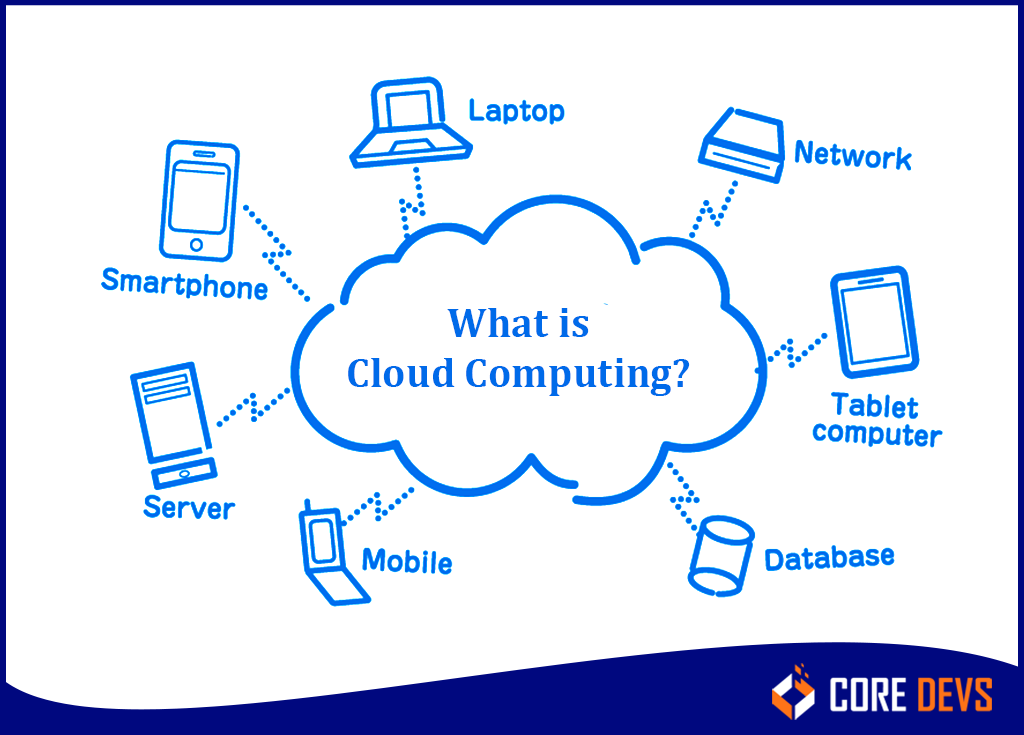
Cloud Computing delivers computing services, including servers, storage, databases, networking, software, analytics, and intelligence, over the internet (“the cloud”). It provides a simple way to access servers, storage, databases, and a broad set of application services over the Internet.
Cloud Computing enables businesses to move their workloads to a secure, online environment, leading to greater efficiency and flexibility.
In real estate and property management, Cloud Computing offers immense possibilities.
For example, a property management platform can be hosted in the cloud, allowing agents, buyers, and sellers to access information and services from anywhere. Likewise, cloud-based blockchain real estate platforms can facilitate secure and transparent property transactions.
Characteristics of Cloud Computing
Here are some defining characteristics of Cloud Computing:
1. On-Demand Self-Service
On-demand self-service in cloud computing is like ordering a pizza online. You can choose the size, toppings, and extras all by yourself without calling the pizza place.
It’s the same with computing resources; you can pick what you need and change it whenever you need to without talking to anyone at the company providing the service. This makes it easy to get exactly what you want, just like customizing your pizza order.
It’s beneficial for things like creating apps or managing properties online.
2. Broad Network Access
On-demand self-service in cloud computing is like customizing a pizza on a website. Just as you pick your own toppings without calling the store, you can choose and change computer resources without talking to anyone.
It lets you quickly get what you need, whether making an app or doing something online. It’s as simple and personalized as making your favorite pizza order!
3. Resource Pooling
Resource Pooling in cloud computing is like a community swimming pool. They share one big pool instead of everyone having their own private pool.
In the same way, multiple users share computer resources like processing power and storage. This is handy in managing real estate or business platforms, where you can use just the amount you need without owning all the equipment.
It’s a shared, flexible system that helps everyone get what they need without wasting space or money.
4. Rapid Elasticity
Rapid Elasticity in cloud computing is like a stretchy rubber band. If you need more space, you can pull it to stretch out; if you need less, you let it snap back.
In the same way, businesses can quickly adjust their computing resources, making them bigger or smaller depending on what they need at that moment.
This is important for things like real estate projects on the blockchain, where needs can change quickly. It’s all about having the flexibility to adapt soon, just like a rubber band can stretch or shrink.
5. Measured Service
Measured Service in cloud computing is like having a detailed utility bill for your home. Instead of knowing you owe money, you see exactly how much electricity, water, or gas you use.
Similarly, you can see and control precisely what resources you’re using in cloud computing, like storage or processing power. This makes it clear and easy to manage costs and needs, especially in things like estate apps or property businesses.
It’s like getting a clear receipt that shows what you used and what you paid for, helping you manage things more efficiently.
6. Cost-Effective
Cloud Computing Cost-Effective is like going to a pay-as-you-go amusement park. You only pay for the rides you want to go on, not an expensive all-access ticket.
Similarly, businesses only pay for their computing services, making them affordable. This is especially great for new businesses or those in real estate who might need different amounts of resources at different times.
It’s like having the flexibility to choose and only pay for what you enjoy, keeping fun (or business) within your budget!
7. Security and Compliance
Security and Compliance in Cloud Computing is like having a top-notch security system in your home, along with rules everyone in the house follows. Security keeps burglars out, and the rules ensure everyone behaves appropriately in the home.
Similarly, Cloud Computing has strong protections to keep data safe and follows various laws and regulations. This is super important for things like blockchain real estate transactions, where a lot of money is involved, and everything needs to be secure and done by the book.
It’s like having guards and rules to ensure everything stays safe and proper.
A Comparison of Cloud and IoT
Cloud Computing and the Internet of Things (IoT) are transformative technologies, each offering unique features and benefits.
While they often work in tandem to create more robust solutions, especially in industries like real estate, app development, and blockchain technology, they have distinct characteristics and functionalities.
Here’s a comparison of Cloud and IoT:
| Aspect | Cloud Computing | IoT |
| Purpose | Computing resources & services | Connecting physical devices |
| Functionality | Virtualized computing resources | Integration of sensors and software |
| Accessibility | Anywhere with internet | Specific networks, remote data access |
| Data Handling | Storage, processing, and analysis | Data collection from environment |
| Integration | With various platforms, services, and applications | With physical objects |
| Security | Robust security and compliance | Complex, enhanced with blockchain |
How are Cloud and IoT Transforming the Future of Enterprise?
The convergence of Cloud Computing and the Internet of Things (IoT) catalyzes a revolution across various industries. Together, they are redefining the traditional business landscape, paving the way for more intelligent, efficient, and customer-centric enterprises.
Let us see how they are Transforming the Future of Enterprise.
1. Enhancing Operational Efficiency
Operational Efficiency can be enhanced with Automation and Resource Optimization. Let’s see how Cloud and IoT help.
Automation
Imagine if your chores at home, like doing the dishes or laundry, were done automatically. Cloud and IoT work together in businesses to do just that! They handle boring tasks like managing properties or handling transactions, freeing up people to do more interesting things.
Resource Optimization
Think of this as a smart fridge that knows exactly what’s inside and can order more groceries when needed. Cloud and IoT ensure that businesses have exactly what they need when needed, especially in real estate, helping things run smoothly without any waste.
2. Facilitating Innovation and Development
You need App and Blockchain Development for innovation and development. Let’s see how Cloud and IoT help.
App Development
Imagine building a Lego set but having an unlimited number of pieces and guidance at every step. Cloud and IoT help developers create apps and other things by providing all the tools and resources they need quickly and easily.
Blockchain Development
This is like having an unbreakable safe for keeping secrets. Cloud and IoT make it easier for people to build systems that keep information secure and trustworthy, especially in areas like real estate.
3. Improving Decision-Making
Data and Predictive analysis can help make an improved decision. Let’s see how Cloud and IoT help.
Data Analysis
Imagine if your video game could analyze how you play and give you tips to improve. IoT gathers information like a detective, and Cloud helps make sense of it all, assisting businesses to make smart choices in fields like real estate.
Predictive Analytics
This is like having a crystal ball that predicts when your bike will need repairs. Businesses use Cloud and IoT to foresee problems and solve them before they happen, such as knowing when a building needs maintenance.
4. Strengthening Security and Compliance
The strength of security and compliance management matters in any enterprise. Let’s see how Cloud and IoT help.
Secure Transactions
Think of this as having an unbreakable lock on your diary. Cloud, IoT, and blockchain together ensure that transactions, like buying a house, are safe and no one can tamper with them.
Compliance Management
Imagine having a robot that knows all the school rules and ensures you follow them. Enterprises can use Cloud and IoT to ensure they follow all the laws and regulations, especially in real estate.
5. Customer Experience
Customer experience is a significant driving factor of the business. Let’s see how Cloud and IoT help.
Personalization
This is like having a friend who knows your favorite ice cream flavor and always has it ready for you. Cloud and IoT help businesses understand what customers like and offer personalized services, like suggesting the perfect home.
Real-Time Engagement
Imagine texting with a friend who always replies instantly. Cloud and IoT help businesses immediately talk to customers, making them feel important and cared for.
6. Promoting Sustainability
Sustainable Energy Management and Waste Reduction is a big priority for the future. Let’s see how Cloud and IoT help.
Energy Management
Think of this as having a smart house that turns off lights when you leave a room. Cloud and IoT work together to manage energy in buildings, helping to save the planet.
Waste Reduction
Imagine if your school used only the needed paper and never wasted any. By fine-tuning processes, Cloud and IoT help businesses avoid wasting resources, contributing to a healthier environment.
These explanations take complex ideas and present them in a way that is accessible to a younger audience. Using relatable examples and simple language makes the concepts more understandable.
| Transformation | Description | Example Applications |
| Enhancing Operational Efficiency | Automating tasks and optimizing resources | Property management, commercial real estate |
| Facilitating Innovation | Supporting agile development and hosting blockchain solutions | Real estate blockchain, app development |
| Improving Decision Making | Offering tools for data processing and predictive analytics | Estate economy, real estate industry |
| Strengthening Security | Ensuring secure transactions and regulatory compliance | Blockchain in property transactions |
| Enhancing Customer Experience | Providing personalized services and real-time engagement | Estate app personalization, real estate platforms |
| Promoting Sustainability | Leading to smart energy management and waste reduction | Sustainability in properties, built environments |
Final Words
The convergence of Cloud and IoT is more than technological advancement; it’s a paradigm shift redefining the modern business landscape across various sectors.
As we’ve explored, the synergy between the cloud and IoT holds the power to transform enterprises by enhancing efficiency, fostering innovation, strengthening security, and much more.
The applications are vast, from real estate to app development, and the potential is boundless.
As we move forward, the integration of Cloud and IoT will continue to be a driving force, setting new standards and laying the groundwork for a more connected and intelligent future in the enterprise.

